On 29-30 October, Tallinn Mechanism member states, observers, representatives of the Government of Ukraine, and private cybersecurity experts gathered in Rome for the initiative's tenth biannual meeting.
The meeting opened with remarks from Italian Deputy Minister of Foreign Affairs Edmondo Cirielli, Ukrainian Deputy Minister of Foreign Affairs Andrii Droniuk, and Deputy Minister of Digital Transformation of Ukraine Olha Krevska.
In their joint statement, international partners “reaffirm the unwavering commitment to support Ukraine’s civilian cyber resilience for a more solid digital infrastructure and for the benefit of all its citizens, as the country continues to endure russia’s unprovoked and unjustified war of aggression”.
“The tenth meeting of the Tallinn Mechanism marks an important milestone in our joint efforts to strengthen Ukraine’s cyber resilience. As russia continues to intensify its cyber and hybrid operations, targeting critical infrastructure and essential public services, sustained and coordinated international support is more crucial than ever. The Tallinn Mechanism has evolved into a powerful platform for translating international solidarity into concrete action. We deeply appreciate our partners’ unwavering commitment and welcome the growing interest of new countries in joining this initiative. Our shared priority is to maintain this momentum, expand practical cooperation and ensure Ukraine’s long-term cyber resilience, which is inseparable from the security of Europe as a whole,” stressed Andrii Droniuk, Deputy Foreign Minister, Chief Digital Transformation Officer.

Photo Credit: MAECI-Ansa
“The Tallinn Mechanism is a unique example of international cooperation to strengthen Ukraine's cyber resilience. It shows that Ukraine is not alone and that we have reliable partners standing by our side. I would like to thank every new member of the Tallinn Mechanism and the Italian team for their efforts to strengthen this initiative, their leadership, and their trust,” highlighted Olha Krevska, Deputy Minister of Digital Transformation of Ukraine.
During the meeting in Rome, Spain was welcomed as the 15th member state and Japan as a new observer. Eight additional countries joined a Tallinn Mechanism meeting for the first time at the invitation of the Italian Chairship. They also expressed interest in possible future membership. The growing number of countries interested in joining the initiative is a positive sign of continued international support for Ukraine.
“Over the past two months, Russia has carried out more than 30 kinetic strikes against Ukrainian data centres. Cyberattacks are almost impossible to count. The enemy is systematically trying to destroy civilian infrastructure across all sectors, and is now focusing on digital systems. For us, hybrid threats have become a combination of cyberattacks and kinetic strikes. The expansion of the Tallinn Mechanism's membership means much more to us than it might seem. First and foremost, every new member country represents a new level of confidence in Ukraine's victory. It is the voice of countries that demonstrate their support through concrete actions and tangible results in protecting the people of Ukraine,” said Vitaly Balashov, Deputy Minister of Digital Transformation for Cybersecurity and Cloud Technologies.
In 2026, Tallinn Mechanism member states have already allocated more than €32.4 million to fund cybersecurity projects and activities under the initiative. These projects help modernise Ukraine's civilian digital and critical infrastructure, strengthen the protection of public services, and keep essential systems running despite growing cyber threats.
More than 10 cybersecurity projects have already been completed under the Tallinn Mechanism at both national and regional levels. Almost 30 additional projects are currently at different stages of implementation.
“Together, we have built an exceptionally valuable initiative – the Tallinn Mechanism. We believe in its importance and we are convinced that by working together we can make it even more effective,” underlined Yuliia Volkova, director of the European Integration and International Cooperation Department Administration of the State Service of Special Communications and Information Protection of Ukraine.
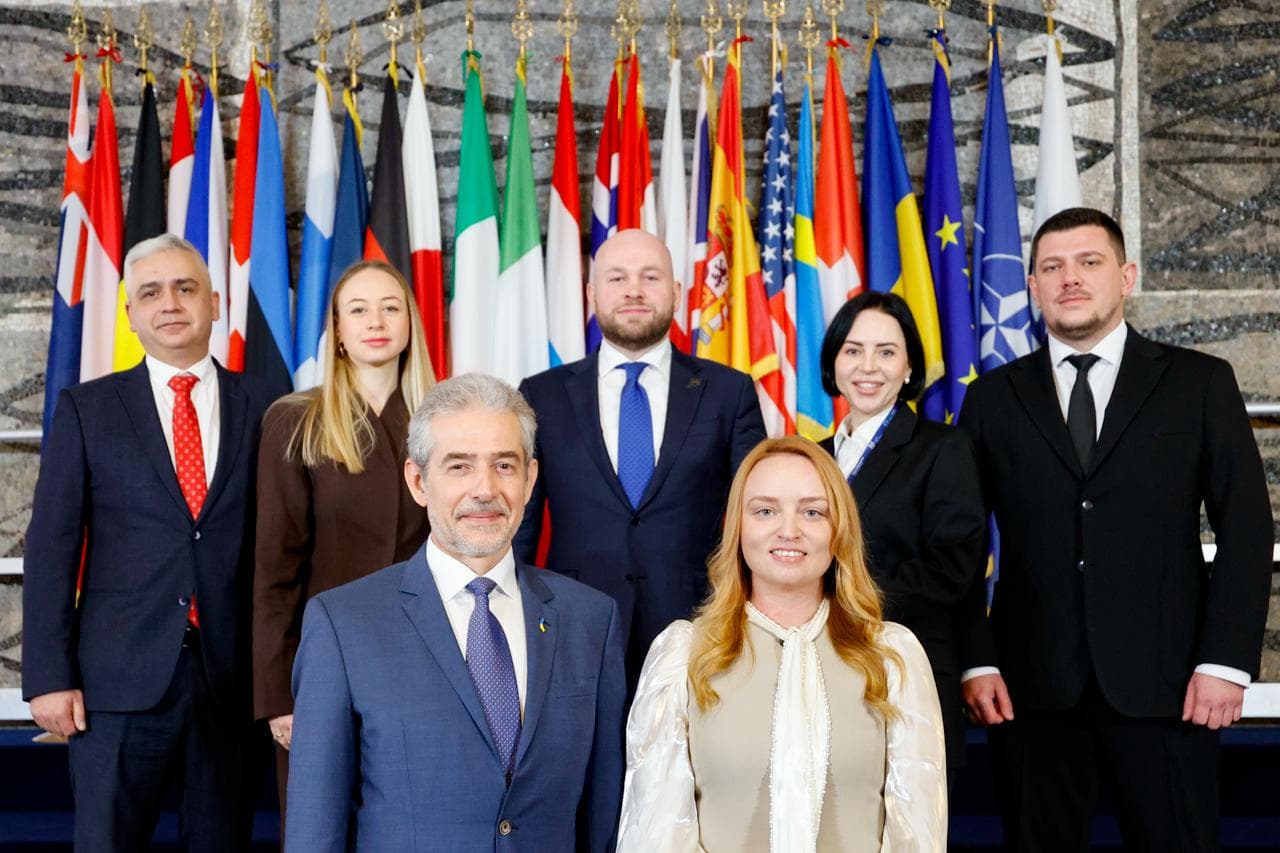
Ukrainian governmental delegation Photo Credit: MAECI-Ansa
The Tallinn Mechanism is also working to involve more private cybersecurity companies in strengthening Ukraine's cyber resilience. During the meeting in Rome, international partners highlighted the importance of public-private partnerships. Several private companies and other project implementers were invited to share their experience, lessons learned, and expectations for future cooperation.
“Strengthening Ukraine’s cyber resilience requires close cooperation between government institutions, international partners, and the private sector. Cybersecurity companies bring not only advanced technologies but also valuable expertise and practical experience. The Tallinn Mechanism supports concrete projects that address Ukraine’s cybersecurity needs. Our priority is to ensure that public-private partnerships deliver sustainable, long-term results and contribute to the protection of Ukraine’s critical infrastructure and essential services,” said Serhii Prokopenko, Head of the NCSCC Operations Department of the Department of Information Security and Cyber Defense of the Office of the NSDC of Ukraine.
At the end of the meeting, participants welcomed Norway and Finland as the next joint Lead Nations of the Tallinn Mechanism for the first half of 2027. They will succeed Italy, which holds the chairmanship till the end of 2026.

TMPO team with Diego Brasioli (Italy) and Fernando Nogales (Spain)
About the Tallinn Mechanism
The Tallinn Mechanism was established by Ukraine’s partners in December 2023 to coordinate international assistance aimed at strengthening Ukraine’s national cybersecurity and cyber resilience.
The list of the member states includes Canada, Czechia, Denmark, Estonia, Finland, France, Germany, Italy, the Netherlands, Norway, Poland, Sweden, the United Kingdom, the United States. And now Spain. The European Union, NATO, and the World Bank participate as official observers.
The Tallinn Mechanism is chaired by Leading Nations chosen on a rotating basis for a six-month term. In the second part of 2026, Italy holds the chairmanship.
The Tallinn Mechanism Project Office (TMPO), based in Ukraine, coordinates the implementation of activities and supports collaboration between Ukrainian institutions and international partners.
TMPO works closely with the Ministry of Digital Transformation of Ukraine, the State Service of Special Communications, the Ministry of Foreign Affairs, the Security Service of Ukraine, and the National Cybersecurity Coordination Center.


