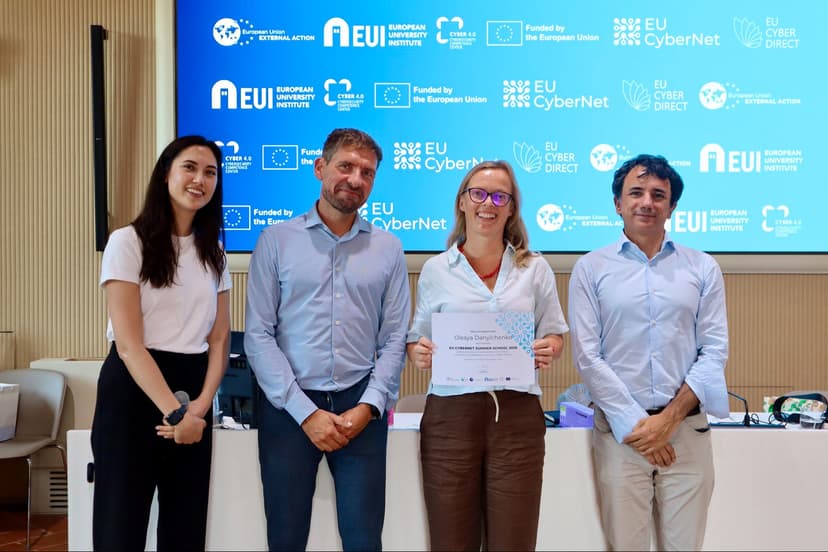
Liina Areng is the Director of EU CyberNet and President of the Latin America and Caribbean Cyber Competence Centre LAC4. She has been engaged in cybersecurity since 2007, as a diplomat in NATO, Adviser at the Estonian Ministry of Defence, and Director of International Relations at the NATO Cooperative Cyber Defence Centre of Excellence.
In the interview Liina provides more details about EU CyberNet activities, and explains how cooperation with the Tallinn Mechanism aligns with the organisation’s broader mission in developing the EU cyber capacities.
EU CyberNet is one of the TM's partners that supports the Tallinn Mechanism Project Office (TMPO). Please tell more about what your organisation does and how it cooperates with TMPO.
As the European Union’s network for external cyber capacity building, EU CyberNet works to strengthen the cyber resilience of EU partner countries by connecting expertise, fostering coordination and promoting the exchange of best practices. With a network of more than 550 experts, 123 stakeholders and over 100 countries reached, the initiative is supporting the EU in becoming a key actor in global cyber capacity building efforts. Our cooperation with the Tallinn Mechanism Project Office (TMPO) reflects this mission and our commitment to supporting Ukraine through a coordinated, long-term and sustainable approach.
EU CyberNet works with partner countries across a wide range of regions, from Latin America to the Indo-Pacific. Most recently, through the launch of EU CyberNet II, our activities have expanded with a stronger focus on Asia, building on the EU’s accumulated experience in cybersecurity strategies, regulatory frameworks and capacity building programs. This global engagement allows EU CyberNet to leverage diverse expertise and lessons learned when supporting partners facing complex cyber threats.
Within the framework of the Tallinn Mechanism, EU CyberNet supports the TMPO by contributing technical expertise and access to a wide network of European cybersecurity professionals, which could be utilised through various capacity building initiatives by EU CyberNet’s stakeholders in support of Ukraine.
Why is EU CyberNet interested in supporting the Tallinn Mechanism?
EU CyberNet is mobilising its resources, including its extensive pool of cybersecurity experts, to deliver targeted support where it is most needed. EU CyberNet’s core objective is to strengthen cybersecurity and cyber resilience worldwide, and the Tallinn Mechanism provides a secure, structured and well-coordinated framework through which this support can be delivered effectively and responsibly.
Applying EU Cybernet´s support in a critical security context, such as in Ukraine, is both a responsibility and a strategic opportunity. Supporting the Tallinn Mechanism enables EU CyberNet to contribute directly to strengthening Ukraine’s cyber resilience while reinforcing long-term institutional capacity. At the same time, Ukraine’s experience in confronting advanced and persistent cyber threats provides valuable insights that inform and strengthen EU CyberNet´s own approaches to cyber capacity building, making this cooperation mutually beneficial and impactful. EU CyberNet welcomes Ukraine’s cyber experts to join the expert pool and share their invaluable experience in safeguarding national resilience and cybersecurity during wartime.
How does this cooperation align with EU CyberNet’s broader mission in external cyber capacity building?
This cooperation aligns with EU CyberNet’s global mission by strengthening its role as a connector between European expertise and international partners in the cyber domain. A core objective of EU CyberNet is to promote coherence, coordination and complementarity among actors involved in external cyber capacity building, ensuring that support efforts are aligned with EU’s strategic priorities and standards. By engaging with the Tallinn Mechanism, EU CyberNet contributes to a collective European approach that channels expertise and resources through a trusted and well-structured platform. This enables EU CyberNet to operate not only as a provider of technical assistance, but also as an enabler of coordinated action, fostering effective alignment between EU actors and international partners.
From your perspective, what makes the Tallinn Mechanism a unique model of international cyber cooperation compared to other support frameworks the EU has worked with?
From EU Cybernet´s perspective what sets the Tallinn Mechanism apart as a model of international cyber cooperation is its secure and well-structured framework, which ensures both transparency and the effective use of resources. Through cyber capacity building across different regions and partner countries over past six years, EU CyberNet has observed that multi-actor initiatives often face challenges such as fragmented coordination, duplicated efforts and difficulties in aligning support with real operational needs. The Tallinn Mechanism addresses these challenges by providing a coordination framework that aligns contributions around clearly defined priorities. In addition, the mechanism´s emphasis on transparency enables participating actors to maintain visibility over how resources are allocated and implemented. Based on EU CyberNet´s experience such centralised and collaborative approach enables efficient cooperation, reduces overlap and maximises the impact of contributions.
EU CyberNet works across many countries. Can we say that the partnership between the Tallinn Mechanism and EU CyberNet contributes to strengthening collective cyber resilience beyond Ukraine, at the European and global levels?
Although the primary objective of the Tallinn Mechanism is to strengthen Ukraine’s cyber resilience, the country’s remarkable capacity to respond to cyberattacks and the sophisticated mechanisms applied throughout this process provide significant added value for all actors involved. One of the greatest strengths of this partnership is the opportunity for mutual learning and knowledge exchange, providing valuable lessons that can improve European and global cybersecurity strategies. These lessons include, among others, policies for protecting critical infrastructure, rapid response protocols for cyber incidents and models for coordinating across public and private actors. By integrating this experience into training programs and international support strategies, EU CyberNet can see the impact of the project beyond Ukraine, strengthening capacities, promoting best practices and enhancing the collective resilience of the EU and its partners.
Therefore, even though the Tallinn Mechanism is directly focused on Ukraine, its implementation contributes indirectly to the global cybersecurity landscape, raising standards, fostering international cooperation and generating insights that benefit the broader international community. This makes the partnership between the Tallinn Mechanism and EU CyberNet a unique and valuable opportunity to further strengthen cyber resilience on a global scale.
Looking ahead, how do you see this partnership evolving, and which areas of cooperation hold the greatest potential for mutual benefits?
Looking ahead, we believe that the partnership between the Tallinn Mechanism and EU CyberNet has strong potential to continue evolving and deepening over the coming years. Given the significant benefits generated through the platform and EU CyberNet’s close engagement with it, maintaining and strengthening this cooperation could be very positive. While continuing to focus on supporting Ukraine, this partnership can also play an even greater role in shaping EU CyberNet’s practices and approaches in other partner countries. In the coming years, we see opportunities to develop new and more advanced capacity building initiatives and tailored training programmes, building on the practical experience gained through collaboration with the Tallinn Mechanism. This includes the development of new techniques and mechanisms that strengthen rapid response capabilities to cyber incidents, protect critical infrastructure and improve coordination between institutions and across borders. By integrating these innovations into EU CyberNet’s portfolio, the partnership can generate greater mutual benefits. Ukraine continues to receive structured, high-impact support, while EU CyberNet can continue to contribute the latest tested tools, lessons learned, and cutting-edge practices across different countries and regions.
About the author. Liina Areng is the Director of EU CyberNet and President of the Latin America and Caribbean Cyber Competence Centre LAC4. Both EU-funded cyber capacity building initiatives are implemented by the Estonian Information System Authority (RIA), a government agency managing Estonian core e-government platforms (X-road, eID, e-election information system, open data and proactive government services) and national cybersecurity. Prior to joining EU CyberNet, Liina served as RIA’s Director of International Relations, where she led the agency’s external engagements and acted as a spokesperson advocating for Estonia’s digital solutions in e-governance and cybersecurity. Liina has been engaged in cybersecurity since 2007, as a diplomat in NATO, Adviser at the Estonian Ministry of Defence, and Director of International Relations at the NATO Cooperative Cyber Defence Centre of Excellence. She has been awarded the Order of the White Star by the President of Estonia.