At the beginning of 2026, the Netherlands launched the €2.5 million Cybersecurity Grant Programme (NL-UA CF) under the Tallinn Mechanism. The programme supports Ukrainian and Dutch companies working together to develop new cybersecurity products and services.
A lot has happened since then. Twenty-three project proposals were reviewed by the Netherlands Cybersecurity Coordination Centre (NCC-NL), and 10 Ukrainian-Dutch consortia were selected to turn their ideas into practice.
The projects are still being implemented, but we would already like to introduce some of them and show how international cooperation in cyber can bring tangible results.
Our first story is about CrisisShield, a project jointly implemented by the Ukrainian company SEC-TA and the Dutch company IG&H Consulting B.V.
Turning Ukraine’s experience into practical training
CrisisShield aims to strengthen the cyber resilience of critical infrastructure, public institutions, and municipal organizations.
The project is based on Ukraine’s real experience of responding to cyberattacks and crisis situations during the war. The idea is the following: organizations need to know what to do during a cyber incident and practice their response before a real attack happens.
CrisisShield provides a training platform where such organisations can work through realistic cyberattack scenarios. Participants can practice how to detect an incident, understand what is happening, make decisions, and coordinate their response.
What has already been done?
The Ukrainian-Dutch team has developed four cyberattack scenarios. They were validated by the State Service of Special Communications and Information Protection of Ukraine.
Based on these scenarios, the team has developed a training platform that can be used to simulate cyber incidents in a practical and interactive way.
The project also includes practical materials to support incident investigation and response. The next step is to organize free training sessions and webinars for organizations in Ukraine and the Netherlands.
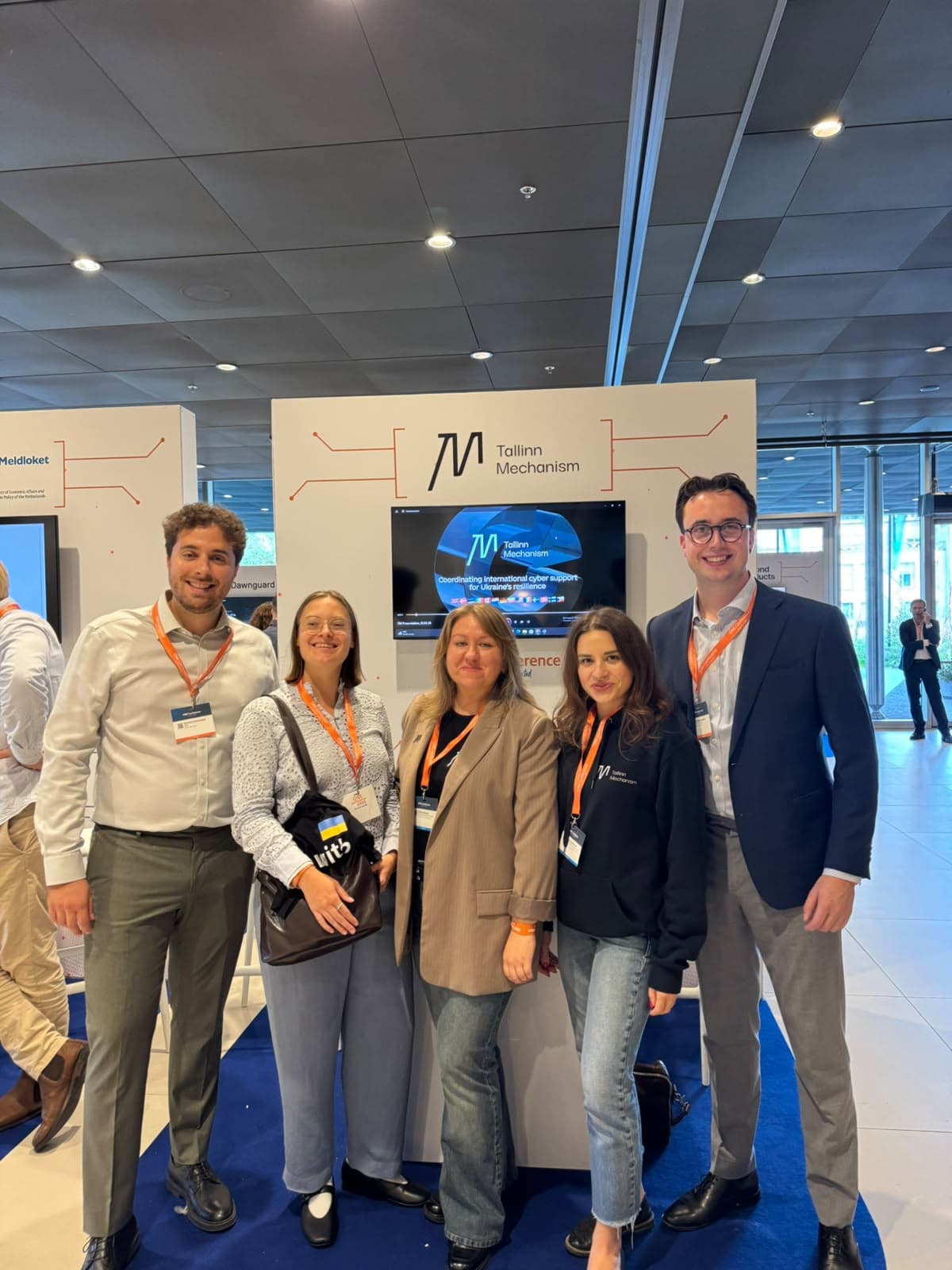
IG&H Consulting B.V, the Netherlands Cybersecurity Coordination Centre (NCC-NL), and TMPO at One Conference in the Netherlands.
The team is also preparing an open-source guidebook. It will make the project’s knowledge and practical experience available to a wider audience.
"CrisisShield gives organisations more than scenarios. It also gives them the procedures and templates to investigate an incident, preserve evidence and report on time under NIS2 and other cyber regulations. What teams practise is what they can defend afterwards," Giovanni Ferronato, Senior Manager at IG&H.
Why does it matter?
Cybersecurity is not only about technology. It is also about people knowing how to act when something goes wrong.
CrisisShield gives organizations (not only in Ukraine) an opportunity to practice their response in a safe environment before they face a real cyberattack. Participants will better understand how technologies such as SIEM and XDR work, how cyber incidents develop, and how to build an effective incident response process based on realistic scenarios.
The platform also makes it possible to train many professionals using the same practical approach. This can help more Ukrainian organizations strengthen their readiness for cyber incidents.
Ukrainian experience and Dutch expertise
We asked Viktor Yakymovych, CEO of SEC-TA, why cooperation between Ukrainian and Dutch companies is important, especially within international grant programmes.

Viktor Yakymovych, CEO of SEC-TA
“Ukrainian companies have gained unique experience in maintaining the resilience of critical infrastructure during crises, continuous cyberattacks, and attacks conducted by state-sponsored and military-linked threat actors. However, many Ukrainian companies still lack sufficient resources to transform this experience into scalable products and expand internationally.
This programme helped us strengthen our capabilities and expand our resources. Through cooperation with our Dutch partner IG&H, we also created a clear path towards the Dutch and wider European markets,” Viktor explains.
Davide Bonalumi, Senior Manager at IG&H, confirms that SEC-TA brings experience that no Dutch firm has: responding to attacks under wartime pressure. “We bring the European regulatory and governance side. Neither of us could have built this alone, and we're already looking at what comes next together,” he said.
So, this cooperation is not about implementing just one project. The Ukrainian-Dutch team is already looking at how the partnership can grow further.
“For us, the real measure of success will be completing the planned trainings and being able to demonstrate how many professionals and organizations strengthened their incident response capabilities through the project.
Together with our partner, we have already started developing additional scenarios for different sectors and industries. Beyond critical infrastructure, we plan to use the platform to help private companies build and test their incident response processes. We also plan to participate together in other European cybersecurity and resilience initiatives,” Viktor says.
CrisisShield shows how international cooperation can turn Ukraine’s wartime cybersecurity experience into practical solutions that can be used both in Ukraine and across Europe.

